
This email address is being protected from spambots. You need JavaScript enabled to view it.
This email address is being protected from spambots. You need JavaScript enabled to view it.
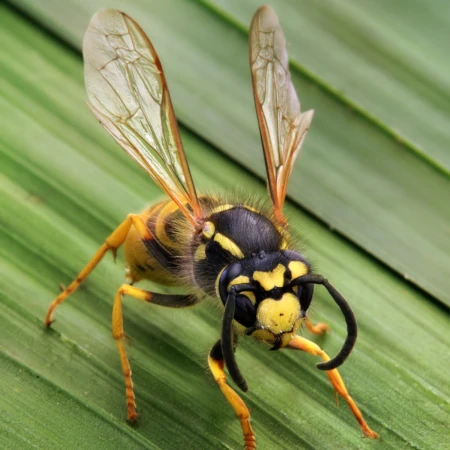
The vast majority of wasp species in the world are solitary. It's the social wasps that can cause an irritating nuisance and sometimes require a pest control solution. There are several species of social wasp in the UK. The most frequently encountered are the Common Wasp (Vespula vulgaris) and the German Wasp (Vespula germanica).
Social wasps build nests using chewed wood from trees or fences and saliva to make a papier mache type material. Each nest is started by one queen in spring and grows as workers take over the building duties, to hold up to 5000 wasps in the summer. The queen continues laying eggs that become female workers all through the summer. These female workers carry out the day to day duties of running the colony. Towards the end of summer the queen lays eggs that become potential new queens and male drones. These queens and males leave the nest to mate with wasps from other colonies. Eventually, around autumn time the remaining workers all die out, leaving only the mated queens who spend the winter hidden away in a type of hibernation in the ground, trees, walls or buildings. The queens emerge the following spring to start the process over again.
Wasps never use the same nest twice, although a queen may start a new nest alongside an old dead one.
Wasps will attack a person if they feel threatened. Each individual can sting multiple times and as it does so it releases a pheromone that acts as a distress signal for others to join it and continue the stinging. Unlike bees, wasps will not die after they sting and will become aggressive if they feel threatened.
Medical help should always be sought immediately if you are stung in the mouth or neck or if you experience dizziness, nausea, unusual swelling or extreme pain following a sting.
Rats are generally nocturnal, so not always seen. However, they can be active during the day and will leave tell tale signs behind.
Initial identification is vital. There are similarities between wasps, hornets and bees that can cause confusion. Bees do not pose the risk associated with wasps and are dealt with in different ways. Not every wasp nest will need destroying. They can be left to die out naturally around late autumn if they are not too close to places used by people. However, those posing a risk should be treated by a professional. Wasps will unsurprisingly feel threatened and become aggressive as a nest is treated.
The nest does not necessarily need to be removed to destroy the wasps, but can be treated with professional use insecticidal dust, spray or foam. This will be applied using specialist equipment. The technician will also make use of full protective clothing to remain as safe as possible.
It is strongly recommended that you do not try to treat a wasp nest yourself. Without specialist knowledge and equipment you run the risk of multiple stings and serious harm.